Thạch Khoán Commune, Thanh Sơn District, Phú Thọ Province
5 (1 review) Cultural Heritage
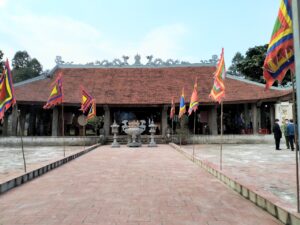
Thạch Khoán Communal Temple, with its rich history, was initially constructed with modest and simple architecture using predominantly wood, bamboo, rattan, and palm leaves. In 1905, the temple underwent reconstruction, only to face destruction by fire in 1914. The temple was restored in 1925 and further renovated by the state and local residents in 1967. Since then, the temple has endured and stands proudly to this day.
Designed in the shape of the letter “Nhất” (一), the temple comprises five sections facing the southwest. The central section, directly oriented towards Ba Vì Mountain (also known as Tản Mountain), is called the main shrine, dedicated to worshiping the Deity Tản Viên Sơn. The left shrine venerates the Princesses Mị Nương, daughters of the 18th Hùng King. The right shrine pays homage to General Đinh Công Mộc and the territorial deities of the Đinh lineage, who contributed to assisting Lê Lợi in resisting the Ming invaders.
The Thạch Khoán Village Festival takes place from the 23rd to the 25th day of the first lunar month. The festival consists of two main parts: the Ritual section, featuring a procession, ceremonies, and traditional offerings, and the Festival section, including a cultural camp organized by residential areas. Cultural activities within the festival involve competitions like making gói (a traditional game), cooking bánh chưng (square sticky rice cake), crafting bánh giầy (round sticky rice cake), playing cồng chiêng (gongs), and đâm đuống (a traditional martial art performance). Additionally, there are community art performances, folk games such as đu trà (tea-swinging), kéo co (tug-of-war), ném còn (throwing a bamboo ball), and various mass sports activities.
This traditional festival is a representative cultural event of the Mường ethnic group, embodying the educational values of the region’s history and culture. It commemorates the merits of the forefathers who pioneered and cultivated this land. The festival contributes to the preservation and promotion of the spiritual and cultural values of the community, encouraging people to turn their attention towards their roots, uphold local cultural traditions, enhance unity among the people, honor traditional culture, and foster a sense of responsibility in protecting, restoring, and elevating historical and cultural relics in the region.
 1168 Hung Vuong Street, Thanh Mieu Ward, Phu Tho Province, Vietnam
  +84889.30.19.19
  contact@visitphutho.vn


