Âu Cơ Temple: A Cultural and Historical Landmark in Phú Thọ Province
Situated in the geographically blessed land of Hiền Lương, Hạ Hoà district, Phú Thọ province, Âu Cơ Temple stands as a unique cultural and historical monument, symbolizing the patriotic spirit and the tradition of national solidarity. The image of Mother Âu Cơ giving birth to Lạc Long Quân and Âu Hồng, the founders of the Vietnamese nation, in a bundle of a hundred eggs, has become an enduring symbol in the minds and hearts of generations of Vietnamese people.

Historical Accounts:
Legend has it that when Lady Ngọc Nương gave birth to Âu Cơ, there were auspicious clouds covering the area, and a fragrant aroma filled the air, signifying the arrival of a celestial being. Âu Cơ, growing up to be remarkably beautiful and skilled in literature and music, became renowned for her eloquence, as described in historical records.
After their union, Lạc Long Quân brought Âu Cơ from Lăng Sương cave to Nghĩa Lĩnh mountain. Âu Cơ then miraculously gave birth to a hundred eggs, each hatching into a child. Recognizing the inherent conflict between the water and fire elements in their natures, Lạc Long Quân made the difficult decision to separate the children. Fifty followed their mother to the mountains, while the other fifty accompanied their father to the sea, ensuring the enduring legacy of their descendants. All of these offspring eventually transformed into deities.
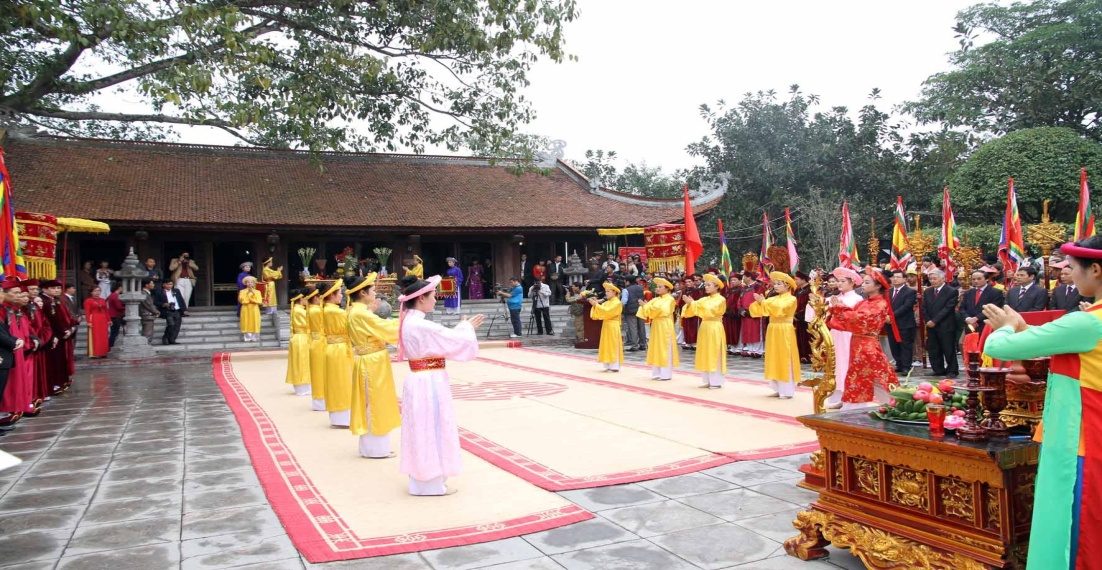
Among the fifty children who followed their mother, the eldest became the first Hùng King, establishing the Văn Lang kingdom with its capital in Phong Châu. Eighteen generations of Hùng Kings ruled the nation for 2,621 years, from the year Nhâm Tuất in 2879 BCE to 258 BCE.
Âu Cơ, along with her children, traveled extensively, winning the hearts of the people and teaching them to cultivate rice, plant strawberries, and raise silkworms for weaving. During their journey, they reached Hiền Lương in the Hạ Hoà district, part of the Sơn Tây citadel. Impressed by the beautiful natural scenery, they decided to settle there, contributing to the development of the region. Notable landmarks like Giếng Loan, Giếng Phượng, Gò Thị, Gò Cây Dâu still bear witness to their historical presence.
Once the settlement stabilized, Âu Cơ and her children embarked on new journeys to unexplored lands. When they had conquered vast territories and expanded the borders, Âu Cơ returned to Hiền Lương, choosing it as her final home. Legend has it that on the 25th day of the lunar month Nhâm Thân, Âu Cơ, along with a group of celestial maidens, ascended to the sky, leaving behind a silk ribbon under a banyan tree. In this spot, a temple was erected to honor her, and generation after generation continued the tradition, creating a perpetually fragrant atmosphere.
In gratitude for Âu Cơ’s contributions and to preserve the national traditions, over 500 years ago, in the 15th century during the Lê Dynasty, King Lê Thánh Tông conferred divine status upon Âu Cơ and ordered the construction of Âu Cơ Temple in Hiền Lương, Hạ Hoà district. The temple was officially recognized as a national cultural and historical relic in 1991.
Celebrations and Rituals:
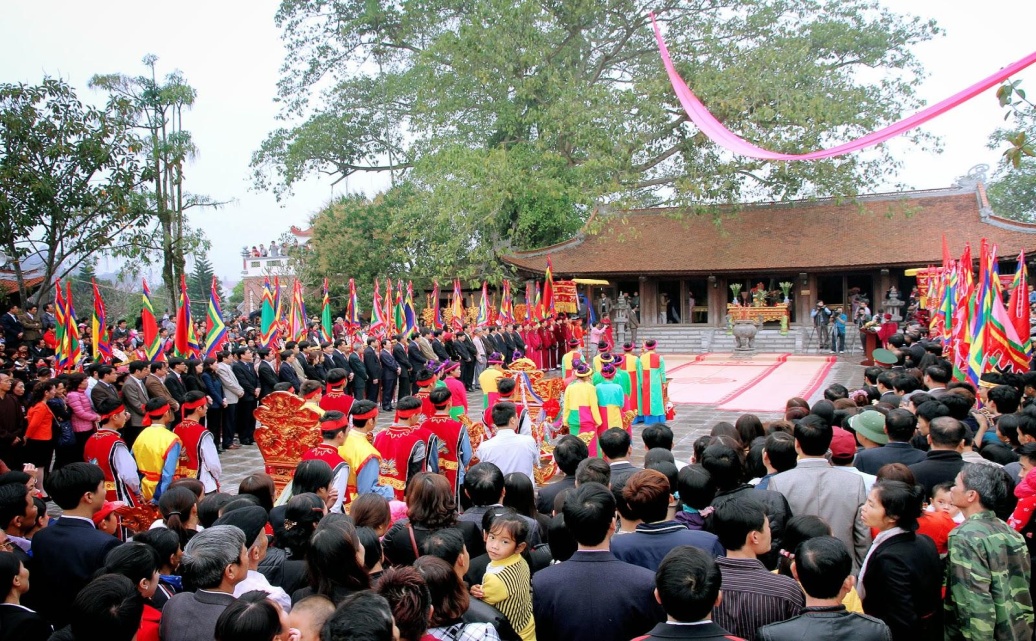
The main festival at Âu Cơ Temple is held on the “Tiên giáng” day, the seventh day of the first lunar month. Other significant dates for celebrations include the 10th and 11th days of the second lunar month, the 12th day of the third lunar month, and the 13th day of the eighth lunar month.
The festival day begins with the ritual of Thành Hoàng ceremony, an all-male procession from the temple to the main courtyard. Following this, a procession with ceremonial offerings, including vegetarian dishes, fruits, and symbolic money, is conducted by a group of twelve young girls dressed in colorful áo dài and traditional accessories.
Cultural and Agricultural Traditions:
Âu Cơ’s presence in Hiền Lương has left a lasting imprint on the cultural and agricultural practices of the region. In preparation for the festival, locals paddle boats into the middle of the Hồng River to collect the purest water for making traditional cakes and offerings to Quốc Mẫu Âu Cơ. This meticulous ceremony is performed with reverence and sanctity.
The making of a hundred kinds of sweet cakes, using fragrant glutinous rice flour and delicious sugarcane molasses, begins weeks before the festival. The cakes are shaped like long, cylindrical sticks, resembling steamed rice cakes. One hundred trays of sweet cakes, along with sticky rice, green bean soup, and offerings of flowers, are presented to Mother Âu Cơ during the main ritual. The offerings are entirely vegetarian, aligning with the sacred nature of the occasion.
On the seventh day of the lunar month, the sky is adorned with flags, drums echo through the air, and the aroma of incense pervades the surroundings. A red silk ribbon is flown from the banyan tree, and people from all walks of life gather beneath its ancient branches to commence the festival. The ceremonial procession, led by men carrying divine flags and followed by dignitaries and elderly villagers in traditional attire, proceeds from the temple to the main courtyard. The ritual is complemented by a group of twelve young girls, dressed in áo dài of various colors and adorned with embroidered headscarves, silk belts, and red outfits for the main celebrant. After the ritual, festivities ensue with various traditional ethnic games and communal activities, including stilt walking, human chess, cockfighting, shrimp fishing, and more. The community gathers to express their gratitude, make offerings, and seek blessings from Mother Âu Cơ.
Âu Cơ Temple and its festival serve as a spiritual and cultural focal point, guiding the people of Việt Nam to appreciate their roots, honor the virtues of their ancestors, and uphold the principles of “Uống nước nhớ nguồn” (Remember the source when you drink water) and “Ăn quả nhớ kẻ trồng cây” (Remember the farmer when you eat fruit). These enduring values provide strength to the Lạc Hồng lineage, inspiring a determined commitment to safeguard the ancestral land and contribute to the ongoing prosperity and development of the nation.
 1168 Hung Vuong Street, Thanh Mieu Ward, Phu Tho Province, Vietnam
  +84889.30.19.19
  contact@visitphutho.vn


