Tam Giang teample – Dai Bi Pagoda: A Cultural Complex in Việt Trì, Phú Thọ
Location: Bạch Hạc Ward, Việt Trì City, Phú Thọ Province
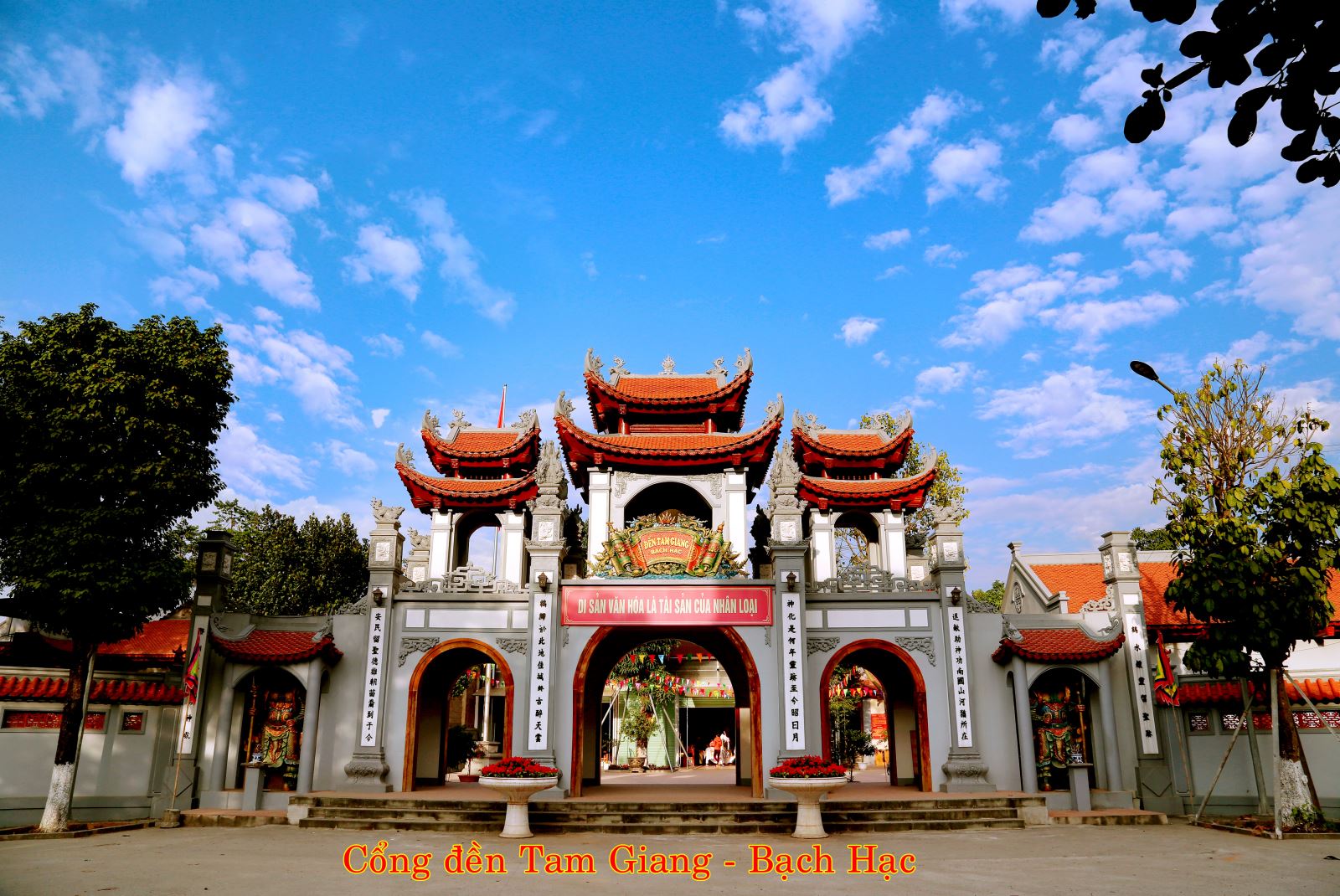
Đền Tam Giang – Chùa Đại Bi is situated in Bạch Hạc Ward, Việt Trì City, Phú Thọ Province. The temple is located at the confluence of three rivers: the Red River, the Lô River, and the Đà River, commonly referred to by locals as the Hạc Triple Junction.
This comprehensive cultural complex includes Đền Tam Giang (Tam Giang Temple), Đền Mẫu (Mother Goddess Temple), Chùa Đại Bi (Đại Bi Pagoda), the footprint of Thổ Lệnh Cao quan Bạch Hạc Đại Vương (the footprint of the Earth God – the High-ranking White Emperor), a bathing pier, a statue of Chiêu Văn Vương Tả Thánh Thái Sư Trần Nhật Duật, and relief sculptures of 18 representative pagodas in Vietnamese Buddhism.
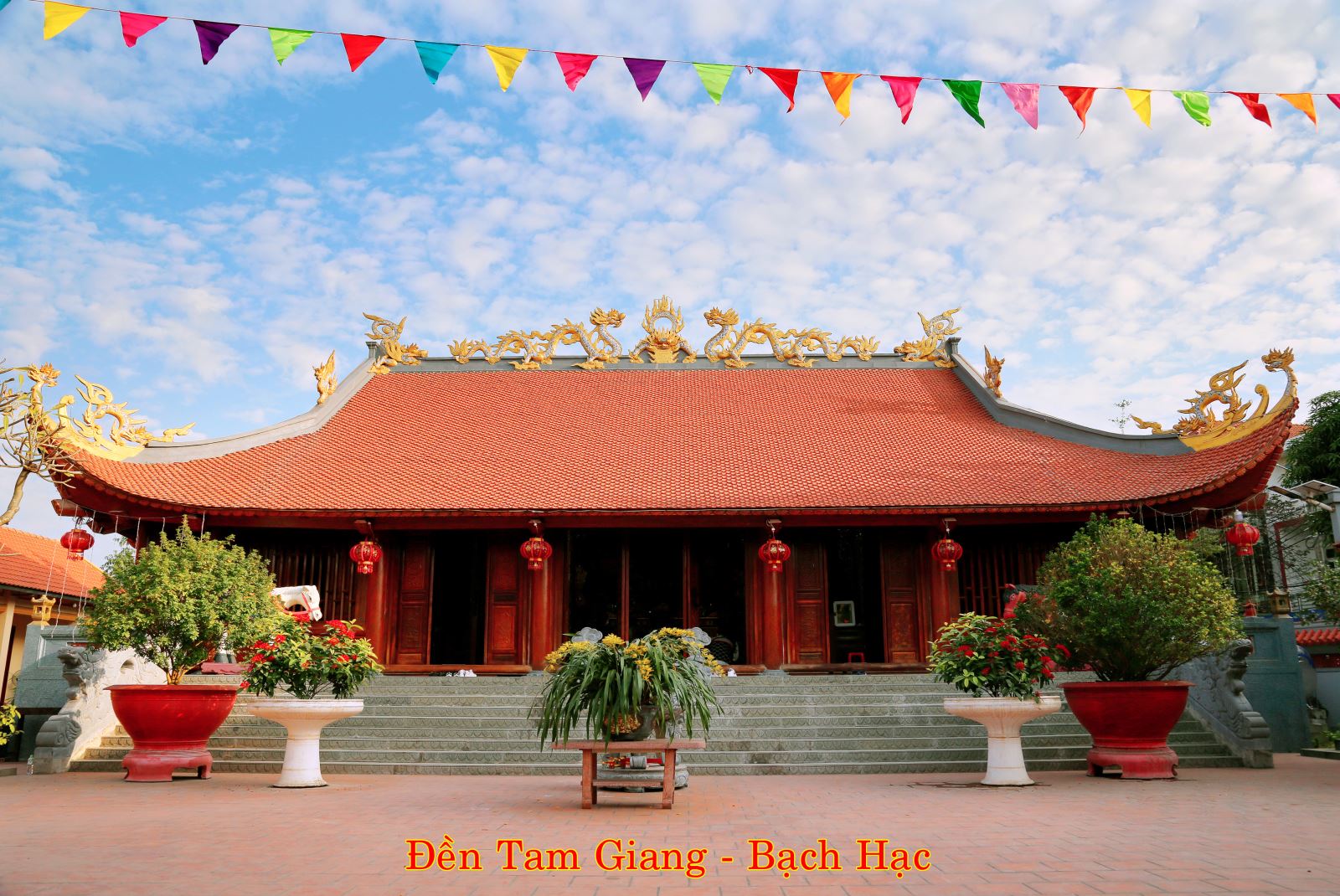
Đền Tam Giang venerates the Earth God Thổ Lệnh. Legend has it that he was a village deity and river god in Bạch Hạc who contributed to traveling the world to find precious remedies for healing various ailments. Upon his passing, he continued to lend divine assistance to military leaders defending the country against foreign invaders.
The temple also pays homage to the Holy Mother Quách A Nương, a talented female general during the time of the Trưng Sisters, and Chiêu Văn Vương Trần Nhật Duật, the sixth son of Emperor Trần Thái Tông. Trần Nhật Duật played a vital role in subduing the Đà Giang chieftain and securing the northwest region, establishing the Bạch Hạc defensive line for 30 years.
Chùa Đại Bi, an ancient temple constructed during the Trần Dynasty (1328) by Chiêu Văn Vương Trần Nhật Duật and his granddaughter, Princess Thiên Thụy, is nearly 700 years old.
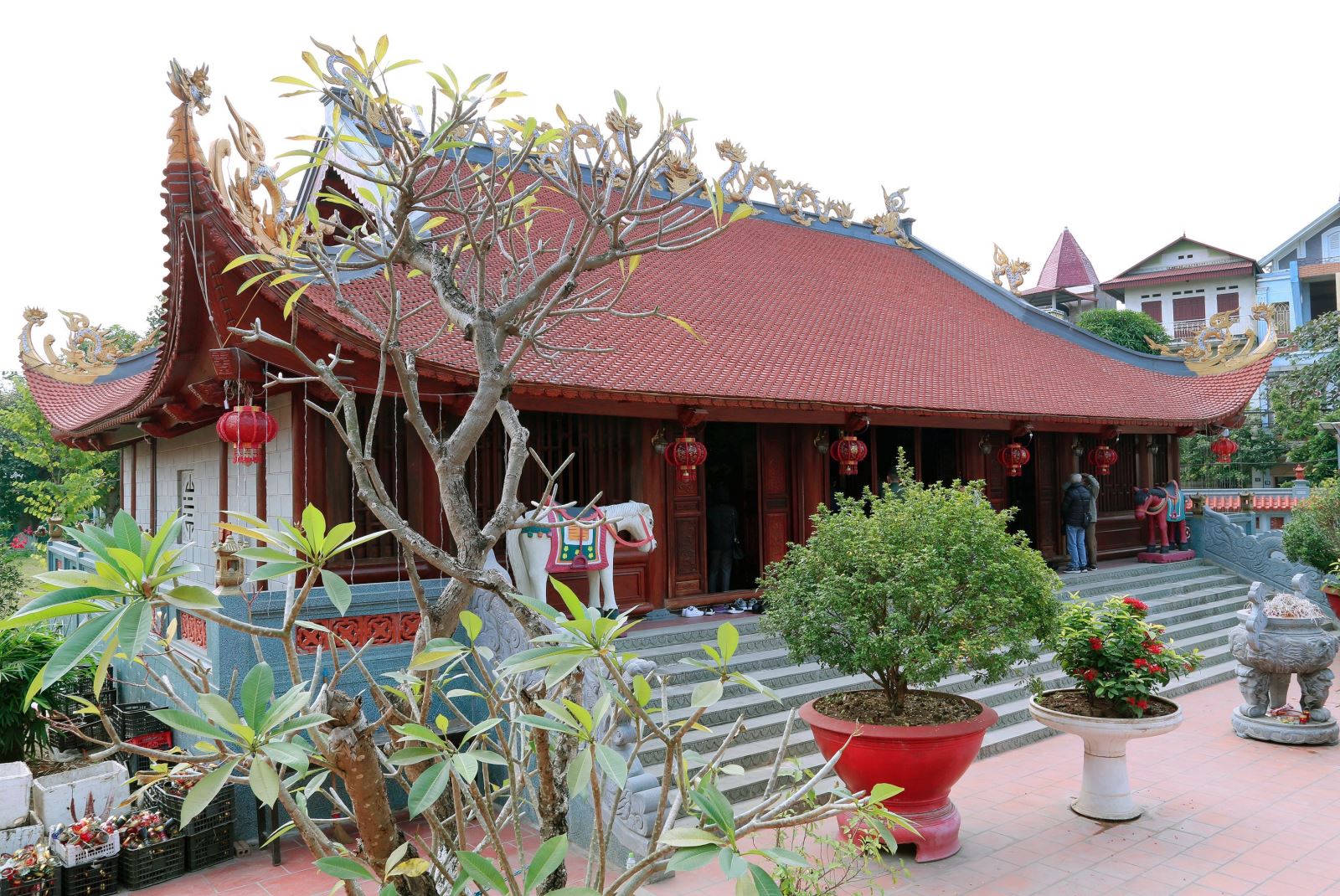
Đền Tam Giang and Chùa Đại Bi have become attractive tourist destinations, welcoming thousands of visitors each year. Particularly, they are associated with the traditional bathing ceremony held on the 9th day of the 3rd lunar month, coinciding with the Commemoration of Hùng Kings – part of the Hùng Temple Festival.
Apart from the traditional bathing ceremony, visitors can also enjoy various forms of folk performances, including music, singing, dancing, and richly decorated displays reflecting the diverse and captivating aspects of the Mẫu worship beliefs.
 1168 Hung Vuong Street, Thanh Mieu Ward, Phu Tho Province, Vietnam
  +84889.30.19.19
  contact@visitphutho.vn


