Chiềng Village in Kim Thượng Commune, Tân Sơn District, Phú Thọ, has made dedicated efforts to preserve the traditional cultural beauty left by their ancestors. The residents of Chiềng have focused on productive labor to create beautiful and meaningful products with their diligent hands.
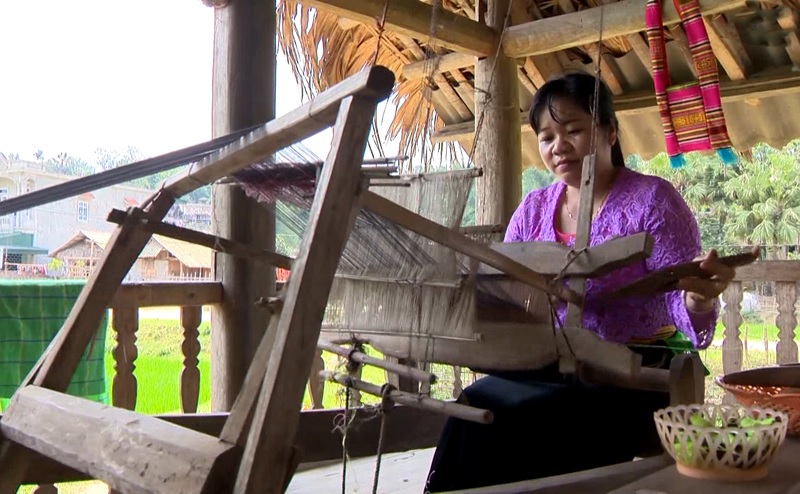
A survey team for the construction of tourism products from the Phú Thọ Tourism Promotion Center visited Chiềng Village in early November 2014. The team was received by the chairman of the People’s Committee of Kim Thượng Commune and other officials. The cultural officers of the commune guided the team to visit the household of Mrs. Sa Thị Khoán, a family that has preserved the craft of handwoven terra-cotta, safeguarding the beautiful aspects left by their ancestors. Mrs. Khoán shared that since the craft of handwoven terra-cotta was officially recognized as a craft village, everyone in the village was joyful and proud. They celebrated the preservation of their traditional ethnic beauty, providing additional employment and income, contributing to poverty reduction in local households.
To create beautiful products, artisans need to select high-quality raw materials and use natural dye sources. The craftsmen use simple wooden and bamboo frames as tools to create unique terra-cotta panels.
The handwoven terra-cotta here is particularly attractive due to its unique and diverse patterns. In addition to traditional patterns, the locals also innovate new designs to make the products more diverse, meeting the increasing demands of tourists. The stages of planting cotton, spinning cotton, pulling threads, and weaving, as well as the materials, patterns, and the secrets of color blending or natural dyeing, have all been passed down from ancient times. The color of the thread and the yarn is made entirely naturally.
Initially, the products were mainly used for local residents’ clothing and as dowries for daughters before they got married. Today, these products have attracted attention and favor from tourists due to being made from simple materials and undergoing a completely manual dyeing and weaving process by the skillful hands of the locals. This unique product has been maintained and preserved by the residents for generations.
 1168 Hung Vuong Street, Thanh Mieu Ward, Phu Tho Province, Vietnam
  +84889.30.19.19
  contact@visitphutho.vn


