“Eating gifts to know the taste of gifts
Bánh Đúc is soft, and Bánh Đa is crispy.”
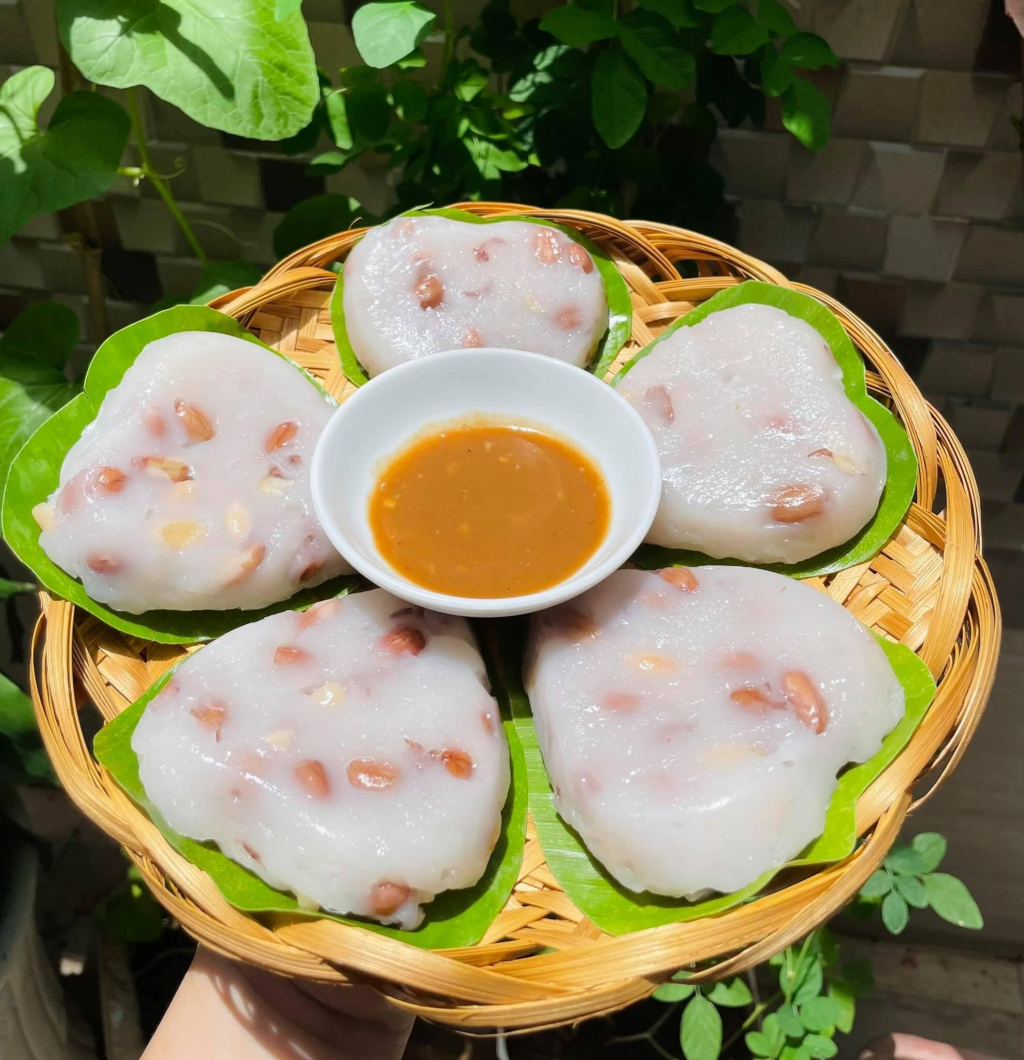
Traversing the country from North to South, Bánh Đúc has become familiar to every Vietnamese person, known as a dish from difficult times, appearing in various regions, each with its unique preparation method. The peanut-filled Bánh Đúc from Đòng village in Xuân Lũng commune, Lâm Thao district, Phú Thọ province, is a traditional specialty that leaves a deep mark with its delicious flavor, imbued with the soul of Phú Thọ.
Delicious and enticing plate of Bánh Đúc
With a long-standing traditional craft of making Bánh Đúc, Đòng village has reached a sophisticated level, gaining recognition from many. The ingredients for making Bánh Đúc are simple: brown rice, peanuts, water from ash, but a lot of effort is put into it. The quality and crispiness of Bánh Đúc depend on the rice selection. The chosen rice must be good, fragrant, and sticky.
In terms of process, the Bánh Đúc-making procedure is quite intricate. The brown rice for making Đòng village Bánh Đúc is soaked for about 2 hours, then drained and ground into flour. For peanuts, the locals prefer a type called “lạc dé.” The crucial ingredient for the distinctive flavor of Đòng village Bánh Đúc is the ash water, prepared by brewing ash obtained after burning certain herbs with water from ground rice flour, creating a unique aroma instead of using lime water like in other places.
Two main ingredients: flour and peanuts for making Bánh Đúc
The most important step in making the cake is the cooking and stirring phase. This is a meticulous process, requiring the cook to be skillful to produce delicious and well-flavored batches. Before cooking, a large pot is greased, and then the ground rice flour mixed with ash water is poured in. The pot is placed on medium heat, and a pair of large chopsticks is used to stir continuously to prevent the batter from sticking, clumping, or sticking to the pot. The fire under the cake-cooking stove must be small and even so that the cake can cook. When hitting the cake with chopsticks, it should make a rattling sound. Once cooked, peanuts are added and stirred evenly before pouring the mixture onto a pre-prepared plate covered with fresh banana leaves or onto a dish, creating a beautiful shape. Pouring the batter onto utensils must also be done very carefully while the cake is still hot and steaming.
Bánh Đúc poured onto a plate covered with banana leaves
According to the experience of the elderly and discerning eaters, a good Đòng village Bánh Đúc must have a naturally pale white color, with a smooth, thin, and glossy surface. When eaten, it should feel soft, cool, and moist without being greasy. The peanuts should add a crunchy and fragrant texture. To enjoy Bánh Đúc, people often cut small pieces to eat with various foods such as braised fish, braised meat, or dip it in sauce, spicy fish sauce, or shrimp paste. Each dipping sauce provides a different and unique flavor to Bánh Đúc. In the past, people in Đòng village used to dip Bánh Đúc in sauce, creating a unique blend of sweet rice, the bitterness of ash water from various leaves, the saltiness of the sauce, and the nutty flavor of peanuts, all combining into a rich and flavorful taste.
Bánh Đúc dipped in various sauces for different flavors
In the past, people in Đòng village used to make Bánh Đúc during leisure farming times, especially during festivals and holidays such as the Double Fifth Festival (5th day of the 5th lunar month), the filial piety Vu Lan festival (15th day of the 7th lunar month), etc. Some families in a neighborhood often joined forces, contributing labor and materials to make a collective batch of Bánh Đúc. This process served as a strong bonding thread connecting generations within families and neighborhoods. It was also a secret recipe for making Bánh Đúc that has been preserved, maintained, and passed down from generation to generation.
Bánh Đúc dipped in traditional soy sauce
Currently, at local rural markets in Lâm Thao, Đòng village Bánh Đúc is displayed for sale as a simple and humble countryside gift, just like the farmers in this area. Additionally, Đòng village Bánh Đúc is also sold at some stores, supermarkets in Phú Thọ province and some other provinces like Vĩnh Phúc, Hanoi, to serve the culinary needs of all people.
Bánh Đúc is displayed for sale at some stores and supermarkets in the city of Việt Trì
For generations, Bánh Đúc has always been considered a simple, rustic gift that brings both a familiar and unique taste to modern busy life. Although truly down-to-earth, plain, and everyday, it has genuinely awakened and deeply embedded the love for the homeland in the hearts of Đòng villagers, instilling a sense of pride in each person for the land that has nurtured generations. If you have the opportunity to visit Phú Thọ, don’t forget to savor the traditional Bánh Đúc from Đòng village, from this Ancestral Land, filled with the essence of this land!
 1168 Hung Vuong Street, Thanh Mieu Ward, Phu Tho Province, Vietnam
 +84889.30.19.19
 contact@visitphutho.vn


