The Lăng Sương Temple Festival is held at Lăng Sương Temple in Trung Nghĩa commune, Thanh Thủy district, Phú Thọ province, on the birthday of Saint Tản, the 15th day of the first lunar month. In addition to the main festival, the Lăng Sương Temple Festival is also organized on the death anniversary of the Holy Mother on the 25th day of the tenth lunar month.
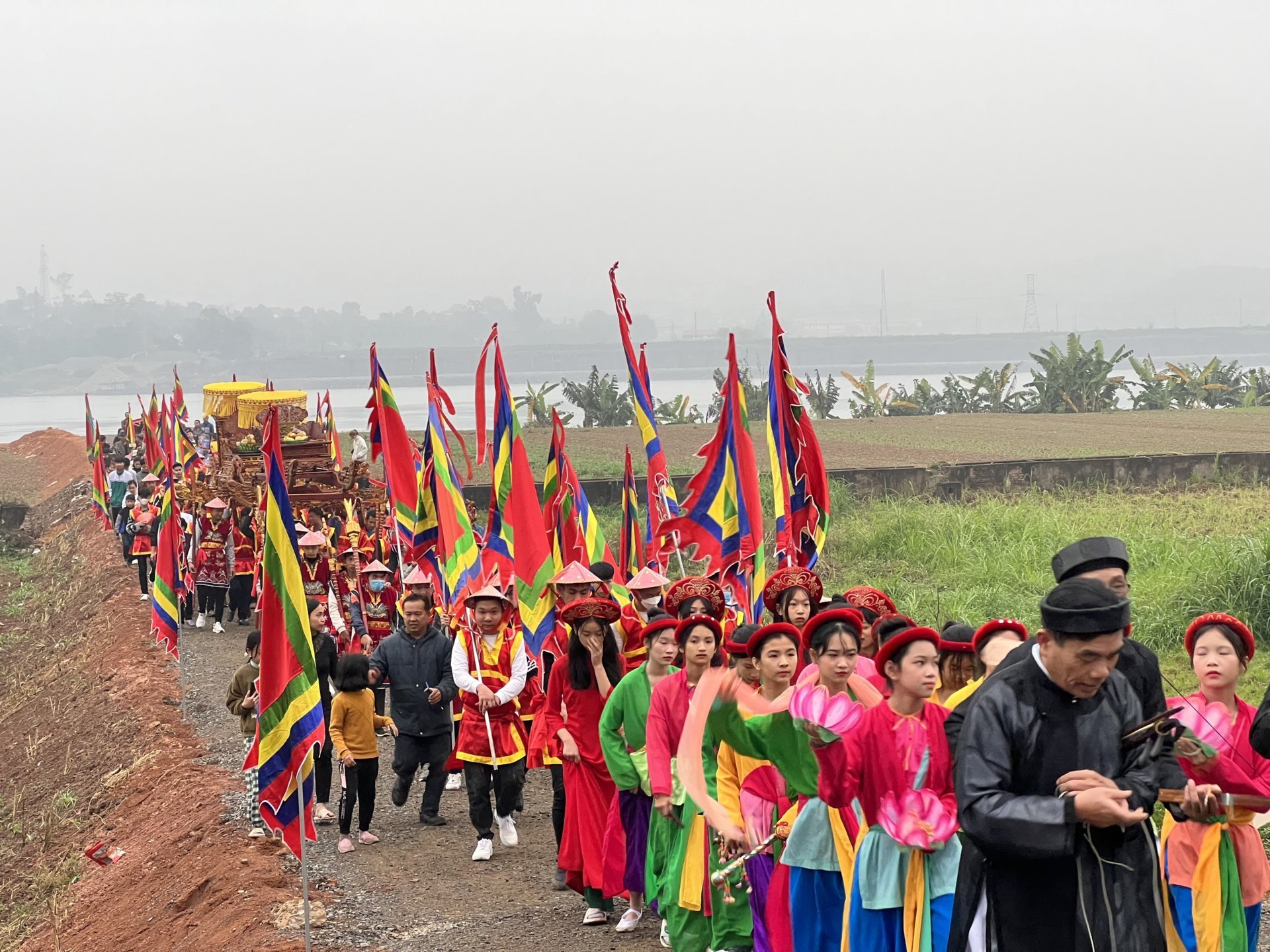
The legend of Sơn Tinh – Saint Tản is one of the myths that emerged early in the dawn of the nation-building era of Vietnam. The core of the story is the worship of a mountain god within the system of angelic worship in ancient Vietnam. Lăng Sương, proud to be the land of Saint Tản’s birth, is not only based on legends and myths but also supported by numerous legends and documents that unanimously agree that the Lăng Sương cave is where Saint Tản was born and nurtured – a deity in the indigenous belief system of the Four Immortals. This uniqueness makes the Lăng Sương Temple Festival carry a distinct and unparalleled significance.
The festival is an affirmation and continuation of the preservation and promotion of the cultural hero – Saint Tản Viên Sơn – formed in the early period of Vietnamese culture and civilization. Additionally, the Lăng Sương Temple Festival is a voice asserting the existence of the Hung Kings era, the first state in the consciousness of the Vietnamese people. It is one of the unique and famous folk festivals in the Tản region, the Đà River area, expressing the admiration and honor of the people for Saint Tản and supplementing the ancestral worship beliefs of the Vietnamese people. The Lăng Sương Temple Festival demonstrates the connection between rituals, performances, legends, and historical sites, combining the significance of agricultural beliefs, such as the custom of “water procession” to the temple.
Cultural cuisine is also a distinctive aspect of the festival. The ritual offerings include live pigs, raw beef, wild chickens, steamed sticky rice, roasted liver, boiled meat, bamboo rice, reflecting the simple yet ancient culinary methods of the inhabitants of Văn Lang – Âu Lạc. The combination of mythology, legends, festival activities, and culinary culture creates unique non-material cultural values of the Lăng Sương Temple Festival.
The festival also highlights the reverence of the agricultural population for the water source that has nourished their lives for generations. The water fetching and procession ceremonies reflect the indigenous wisdom harmonizing with the environment, portraying a close, friendly, and environmentally bonded way of life.
Another special feature of this festival is the phenomenon of “watching the wind blow the flag” to recognize when the saints and deities have “returned” to the community. This is the local people’s experience during the festival, summarizing folk knowledge related to nature, thereby connecting natural elements with the festival, making this cultural activity spiritual, sacred, and mystical.
In terms of festival organization, from preparation to the rituals and performances, the order is arranged logically according to the ceremonial part before the folk games. The combination of spiritual, cultural, and artistic values creates a diverse and unique atmosphere in the festival.
Since its restoration, the Lăng Sương Temple Festival has become a cultural and spiritual activity with great significance in the spiritual life of the local community. It is a festival with distinctive characteristics and high synthesis because it almost fully encompasses various types of non-material cultural values such as folk literature, performing arts, social customs and beliefs, and folk knowledge. The festival not only meets the creative and enjoyment needs of cultural and spiritual values of all social classes but is also an opportunity for the community to contribute, honor their own saints.
On September 4, 2018, according to Decision No. 3325/QD-BVHTTDL of the Minister of the Ministry of Culture, Sports and Tourism on the announcement of the list of national intangible cultural heritage, the Lăng Sương Temple Festival, Thanh Thủy district, along with 7 other national intangible cultural heritages, was officially honored to be included in the list of national intangible cultural heritage in 2018.
 1168 Hung Vuong Street, Thanh Mieu Ward, Phu Tho Province, Vietnam
  +84889.30.19.19
  contact@visitphutho.vn


