Community-based Tourism Innovation in Phu Tho
Phu Tho, with its abundant natural landscapes, historical values, and indigenous cultures of the Muong and Dao ethnic groups, along with diverse culinary traditions across regions, serves as a foundation for developing community-based tourism. After a prolonged period affected by COVID-19, this model is increasingly evolving and innovating, attracting a large number of tourists and contributing to increased income for the local population.

Visiting Long Coc tea hill in Long Coc commune, Tan Son district, is an ideal destination for photography enthusiasts and those passionate about exploring and witnessing the sunrise on tea hills. Tourists who come to visit and experience provide the premise for economic development for the local people. Previously, local residents only started providing services with simple meals lacking the distinctive characteristics of regional cuisine, and accommodation services were somewhat rudimentary. However, they have become more savvy in how they conduct tourism. Recognizing themselves as the subject in the community tourism model, locals have proactively learned and adopted innovative approaches to ensure visitors have the most complete experiences.
Tony Luan Homestay, operated by Mr. Ha Van Luan’s family in Bong 1 hamlet, is now one of the preferred locations for many tourists visiting Long Coc tea hill. Luan’s family has been a pioneer in innovation in business and improving service quality. They effectively use social media as a useful tool for promotion, introduction, and service provision for their homestay. Luan is also a photographer and an amateur guide, capturing photos according to the needs of visitors and leading tour groups to other tourist destinations beyond Long Coc, such as Xuan Son National Park, Ham village, Chuoi village in Kha Cuu commune, Thanh Son district. Luan shares: “I often wander on the tea hills at many moments during the day, finding beautiful spots to guide visitors to ‘check-in’ for the first time in Long Coc or to preserve beautiful memories for them. I have gradually improved and upgraded the quality of services at the homestay, from preparing characteristic dishes to renovating and ensuring comfortable accommodations while preserving the cultural characteristics of ethnic groups. I also collaborate with tea-producing households to provide visitors with additional interesting experiential activities.”
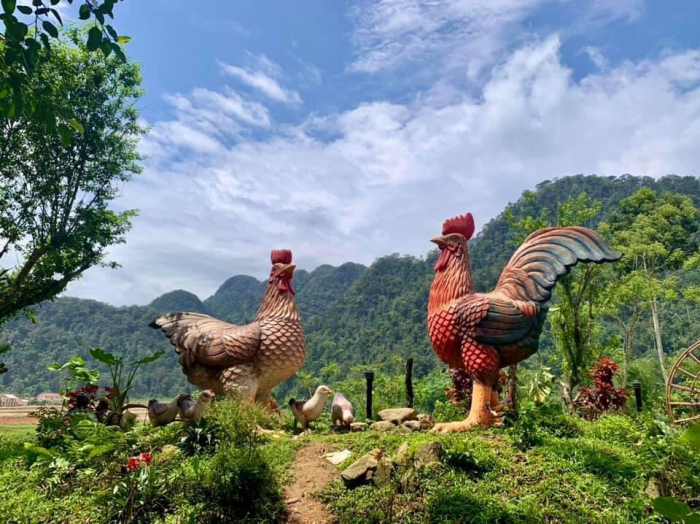
Homestays with modern and unique features.
Xuan Son National Park, considered the “green lung,” is an attractive tourist destination in the northwest of the province, drawing visitors with its pristine nature, beautiful caves, and rich flora and fauna. The area has a distinct four-season climate throughout the day. Currently, Xuan Son commune has 10 households engaged in homestay business, capable of serving over 300 tourists for accommodation and 500 tourists for catering. If tourism activities were once relatively small-scale, lacking professionalism, and inadequately invested, local households providing tourism services have now embraced new ways of doing business. They actively participate in training courses, workshops on community tourism, promote tourism on social media, and invest in upgrading homestays and adding services to attract tourists.
Deputy Chairman of the People’s Committee of Ha Thi Hien said: “Currently, households engaged in homestay business for tourists have been trained and improved in knowledge and skills such as communication, reception techniques, housekeeping, table service, beverage preparation, food processing and presentation, and the ability to build and perform a cultural program to serve tourists. In particular, tourists also get to experience the daily life and agricultural production of local residents, services such as bathing, and foot soaking with medicinal leaves. The innovation and diversification in the way locals provide services have gradually proven effective in keeping tourists in Xuan Son.”
In conclusion, community-based tourism brings many benefits and robust economic development for local people. Therefore, for sustainable development of community tourism, local residents must always innovate and be creative in their approach to keeping up with trends, while enriching cultural traditions and beautifying the environmental landscape to attract tourists.
 1168 Hung Vuong Street, Thanh Mieu Ward, Phu Tho Province, Vietnam
  +84889.30.19.19
  contact@visitphutho.vn


