Phu Tho Province is developing a tourism product associated with the preservation and promotion of the cultural and spiritual heritage “Water Procession Ritual of Bach Hac, Tam Giang Temple, Viet Tri City, Phu Tho Province.”
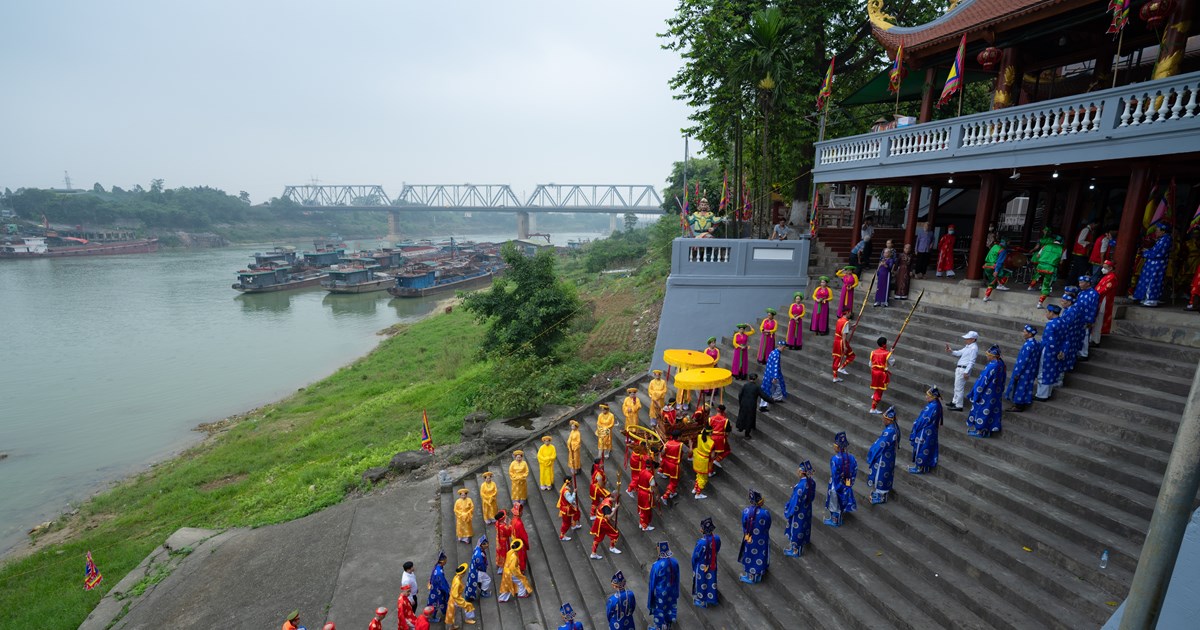
Tam Giang Temple is a sacred temple located at the confluence of three rivers – Thao River, Da River, and Lo River, in Bach Hac Ward, Viet Tri City, Phu Tho Province. The Bach Hac Festival at Tam Giang Temple originates from village associations, closely tied to the worship of the Village Guardian God Tho Lenh, the hero Chieu Van Vuong Tran Nhat Duat, and the Holy Mother Quach A Nuong, all of whom contributed significantly to the people and the land of ancient Bach Hac.
To commemorate the merits of the ancestors, the local people in Bach Hac organize annual ceremonies and vibrant cultural, artistic activities, and folk games. The first festival is held during the Lunar New Year from the 3rd to the 5th day of the first month; the second festival takes place on the 30th of March (the birthday of the deities), and the third festival is organized on the 25th of September (the canonization day).
In the Bach Hac festival, the water procession is one of the most important rituals. This ancient custom is a sacred ceremony, expressing the essence and distinctive cultural features of the ancestral land. Besides the purpose of bringing water for offering to the deities, the water procession also symbolizes people’s aspirations for the vitality of nature and humanity.
Usually, the procession begins from the left bank of the river near Tam Giang Temple, against the current of the Lo River towards Viet Tri Bridge, passing the temple of General Quach A Nuong, then reversing back downstream to the confluence of three rivers. To obtain sacred water, the procession must reach the confluence, typically creating one side with clear water and the other side with turbid water. According to the elders in the village, to find the sacred water, besides choosing the right location, the person collecting it must have experience and good fortune to choose the best place with sufficient Yin and Yang. To determine whether the water at that location has enough Yin and Yang, the collector has to put their hand into the water and feel its temperature, relying entirely on the experience of that person.
Before collecting water, a red or multicolored fabric circle is released into the water to determine the collection point and prevent impurities from entering. According to local beliefs, water is only considered sacred if scooped within this circle. Afterward, the water is poured into a sacred bowl through a red fabric. After completing the water collection ritual, the procession brings the bowl of sacred water back to the temple for the worship ceremony.
Developing into a Tourism Product
Since 2010, the Bach Hac festival and Tam Giang Temple have been researched and restored by local authorities and residents according to traditional rituals. In 2022, the Phu Tho Tourism Promotion Information Center is leading a project to build a tourism product associated with the preservation and promotion of the cultural and spiritual heritage “Water Procession Ritual of Bach Hac, Tam Giang Temple, Viet Tri City, Phu Tho Province.”
The goal of the project is to conserve and promote the cultural and spiritual heritage, the uniqueness of the ancestral land, and meet the experiential needs of tourists. The tourism experience product “Water Procession Ritual of Bach Hac, Tam Giang Temple, Viet Tri City, Phu Tho Province” also contributes to serving the province’s tourism development, building Viet Tri City into a festive city.
Mr. Nguyen Duc Hoa, Director of the Phu Tho Tourism Promotion Information Center, stated that the Bach Hac water procession ritual is being developed into a distinctive tourism product of Phu Tho. Tourists will not only experience the ritual with the local people but also gain insights into the cultural and spiritual significance of this tradition. Additionally, tourists will have the opportunity to personally bring sacred water from the confluence of three rivers to their homes.
Some travel businesses in Hanoi have conducted surveys and studies to develop tours associated with this unique water procession ritual. Phung Quang Thang, Chairman of the Hanoi Travel Association, mentioned that activities at Tam Giang Temple would be connected with Lăng Sương Temple and the Historical Complex of Hung Kings to create a specialized tourism product highlighting cultural and historical values. This connection aims to enhance the tourist experience and extend the duration of tourists’ stays when visiting Phu Tho.
According to local residents, the Bach Hac water procession ritual has long been known to many people and has become increasingly famous thanks to the media and social networks. Every year, many tourists, especially from the southern provinces, come here to collect sacred water for significant activities like soldering a family goldsmith line, renovating houses, or some ceremonies in construction projects. In response to the needs of the people and tourists, developing the “Water Procession Ritual of Bach Hac” experience tour in a safe and organized manner is essential. Furthermore, when developing into a tourism product, the water procession will be held during the day to ensure the safety of tourists, instead of taking place at night as per the old tradition.
Within the scope of this project, the local community will be trained in tourism skills and customer service to enhance the tourist experience. Some infrastructure items will also be invested in and renovated, such as cultural spaces, landscapes, and piers in the Tam Giang Temple area. It is expected that in the third or fourth quarter of this year, the “Water Procession Ritual of Bach Hac” tourism tour in Phu Tho will officially be tested to welcome tourists.
 1168 Hung Vuong Street, Thanh Mieu Ward, Phu Tho Province, Vietnam
  +84889.30.19.19
  contact@visitphutho.vn


