In the journey to visit the Hung Temple, every tourist desires to buy some small gifts that are typical products of the ancestral land to give to friends and relatives. Especially in the first days of the new spring, tourists from all directions flock to the Hung Temple. The sacred journey to the ancestral land is one of the most widely celebrated festivals in the country. The National Historical Relic of the Hung Temple is located in the fairy tale village of Hy Cuong commune, Viet Tri city, Phu Tho province. Not only is it a sacred land, but it is also a famous tourist destination with picturesque landscapes and local specialties, leaving a special mark in the hearts of visitors.
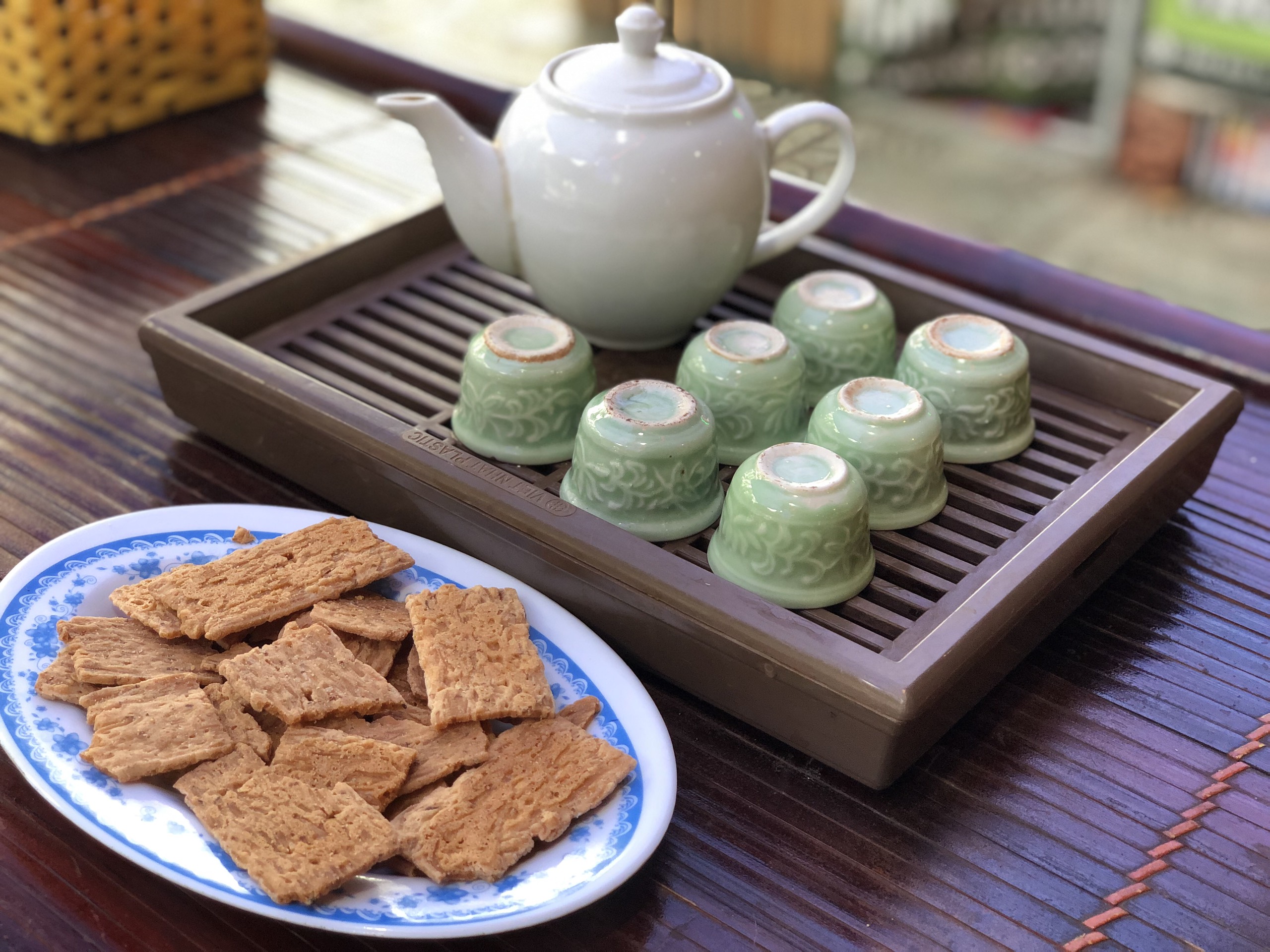
Taro cakes are made from the taro plant, which often grows wild in mountainous regions. Locals usually dig up taro roots, scrape off the skin, boil, stir-fry, or make soup with them. The taro root contains a lot of starch granules, and the root itself is a medicinal herb in traditional medicine, used to treat poor appetite, prolonged diarrhea, respiratory weakness, cough, bronchial asthma, intestinal obstruction, and diabetes. The taro plant is also a type of food used to combat hunger during drought, famine, or as a medicine to reduce the craving for sugar in diabetic patients. The reason is that taro has a very high starch content (almost equal to rice) and contains mucin protein, which hydrolyzes starch into sugar.
The production of taro cake products involves some people in Hy Cuong commune exploring and learning from experienced regions in the production of cakes and candies, such as Hanoi and Bac Ninh. They then return to produce directly in their hometown. From local and neighboring regions’ ingredients, business owners have processed various delicious cakes with unique flavors, such as taro cake, crispy sesame taro cake, and traditional baked taro cake.
To create a cake product, it must go through many stages. Taro cakes are made from the main ingredient, taro, by grinding taro into powder, then boiling it with glutinous rice flour, arrowroot starch, and sugar. The cook uses experience to observe the degree of softness and then molds it, lines it with coconut leaves, lets it cool, cuts it into pieces, and packages it. To build a brand and maintain the quality of the product, the selection of quality raw materials, ensuring food safety, has been the concern and priority of cake and candy makers. The selection and processing of raw materials to ensure food safety and hygiene are placed at the forefront. All ingredients such as taro, rice, and peanuts are carefully selected, ensuring they are not moldy or damaged to produce high-quality products. All employees, when manufacturing, are required to wear protective gear to ensure hygiene. The specialty cakes from these establishments ensure they do not use any preservatives and comply with food safety and hygiene processes.
Rich in variety and diverse in form, these products made from taro and other local agricultural products have reached many counters within the historical relic area and some other provinces. Tourists visiting the Hung Temple can now buy these products as the main gift made from typical local ingredients, produced by the people at the foot of the Hung mountain. To date, taro cake products have been well received by many tourists nationwide and are distributed in many provinces, gradually asserting their reputation in the market.
 1168 Hung Vuong Street, Thanh Mieu Ward, Phu Tho Province, Vietnam
  +84889.30.19.19
  contact@visitphutho.vn


