Phenomenal products often come with numerous myths and legends, but when it comes to the Anh Vũ fish, there is little room for skepticism in the realm of folklore and history. The tales surrounding Anh Vũ have never failed to captivate its audience.
Countless legends tell the story of the Anh Vũ fish, hailed as the fish of kings, one of the “five precious aquatic treasures” in the confluence of the Bạch Hạc rivers (Việt Trì – Phú Thọ). The locals, when asked about this fish, speak of it with great pride as the unique specialty of the city at the crossroads of the Lô, Thao, and Đà rivers.
Inheritance Beyond Generations
According to tradition, in ancient times near the border of Hưng Hoá province (modern-day Phú Thọ), there stood a towering cornstalk whose roots penetrated into China. King Ngô sent Lý Bạch to suppress it, causing the tree to fall. At its base, a deep cave emerged, connecting to a river in Chinese territory where the Anh Vũ fish resided. Every freezing winter, the fish would migrate south, returning in the summer.
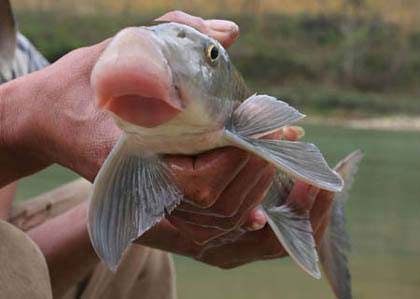
Historical records state that the Anh Vũ fish has existed in Vietnam for over two thousand years before Christ, dating back more than four thousand years. The Đại Việt sử lược (14th century) recounts a fisherman catching a peculiar fish in the Lô River during the reign of the third Hùng Vương (Hung Kings). The fish had shiny green scales, white belly scales, red fins, and a mouth resembling a pig’s. Recognizing its rarity, the fisherman presented it to the king, and thus began the renown of the Anh Vũ fish.
Over four millennia of history, the Anh Vũ fish has inspired historians, writers, and poets, becoming a subject of admiration and debate regarding its origins and habitat. Historical texts such as Đại Nam nhất thống chí, Dư địa chí, Đại Việt sử ký toàn thư, Sơn Đường khảo tứ, Uyên Giám loại hàm all make references to the Anh Vũ fish. Yet, to this day, no one has definitively determined its origin. Local legend suggests that the Anh Vũ fish transforms into a dragon, hence the river segment was once called Long Môn.
Exquisite Taste Beyond Comparison
The culinary heritage of this royal fish is also echoed in Sơn Tây, Cao Bằng, Lạng Sơn, but the consensus remains that the best is found at the confluence of the Lô, Thao, and Đà rivers in Việt Trì.
According to historical culinary records from the Lê dynasty, the most delicious part of the Anh Vũ fish is the lip cartilage. These lips develop uniquely because the fish feeds exclusively on moss growing on rocks in the river. The Anh Vũ’s feeding habits, using its lips to gnaw and to anchor itself against water currents while sleeping, contribute to its distinct features. Locals believe that this fish has cooling properties and can treat ailments related to heat, constipation, and nourish the kidneys.
The traditional palace cuisine dictates that steaming is the best way to savor Anh Vũ fish. After cleaning and gutting the fish, it is marinated with ginger, salt, and fish sauce. The fish is then placed on a layer of ginger leaves before being steamed to perfection. This method preserves the fish’s original taste and fragrance. When enjoying Anh Vũ fish, it is often accompanied by sour star fruits, green bananas, and thin rice paper, along with various herbs such as basil, betel leaves, and coriander.
There is a mythical story about a 70-year-old Taoist who, despite his age, maintained vitality by consuming two Anh Vũ fish lips, soaked in honey and white rose petals every week. This unconventional remedy not only cured his cough and asthma but also… enhanced his vitality in a peculiar way!
Life of Fisherfolk at the Crossroads
The saying “Every fisherman is pleased with a valuable catch” is often sung aloud in the Northwest and Northeast regions when facing the challenge of netting this precious fish. In Phú Thọ, during the freezing days of March, sitting down with an elderly fisherman who has spent decades searching for the Anh Vũ, one hears tales of the past.
Once, the entire village made a living from fishing, but today, very few remain. The era of economic openness has made everything valuable scarce. Fisherfolk had to set aside their nets and find alternative livelihoods. The pursuit of Anh Vũ fish is arduous. Diving deep requires specialized nets, and some would even bleed from their ears due to the pressure. The fish has unique living habits, requiring sufficiently deep water and cold temperatures to leave its cave. In the past, there were a few specialists hunting Anh Vũ, but now it is left to the younger generation with modern equipment. It’s been rare for the past few years to hear of anyone successfully catching an Anh Vũ fish. Those willing to pay substantial sums for the fish find it hard to locate a seller. While the fish is now considered a delicacy, it has become incredibly scarce.
 1168 Hung Vuong Street, Thanh Mieu Ward, Phu Tho Province, Vietnam
  +84889.30.19.19
  contact@visitphutho.vn


