For a long time, the traditional ear cake of Phú Thọ Town has gained popularity. It is used in weddings, celebrations, replacing plain rice meals, as it is convenient, elegant, and attractive.
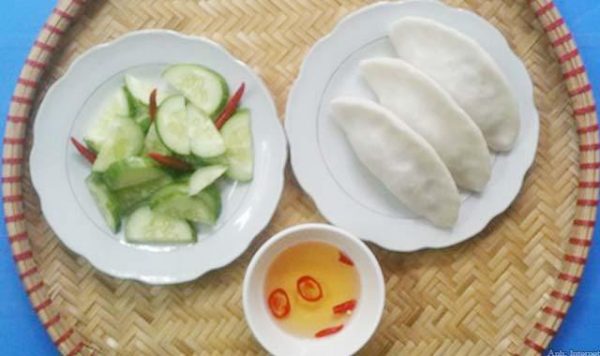
The ear cake of Phú Thọ has been a valued gift sent to Hanoi and several neighboring provinces. Despite being an everyday gift, its meticulous craftsmanship needs to be preserved.
The tradition of making ear cakes in Phú Thọ Town dates back to ancient times. The ear cake, shaped like a human ear, is made of plain rice flour and filled with pork. The process is not overly complex, and the tools used are simple, yet not everyone can master the art of making ear cakes.
In the past, the renowned ear cakes of Mr. Tùng were famous throughout the region, along with other specialties like Ký Sương black sesame cake, Chi Chấp sticky rice cake, Mrs. Minh’s sweet soup, Linh Phượng chicken porridge, and more. These items were particularly exceptional due to the use of water from the “Sacred” well, giving them a unique texture, flavor, and aroma.
Presently, this traditional craft is only preserved in a few households, such as those of Mrs. Định and Mrs. Ngải. Perhaps due to the delicate nature of the craft, not everyone can make the traditional ear cake as it should be.
The primary consumption of Phú Thọ ear cakes is for breakfast. To experience the authentic taste, you must visit a local vendor who keeps the cakes in a tightly covered bamboo basket. The best way to enjoy them is to have them served right away, still slightly warm. Holding a piece with a banana leaf or in your bare hands, you can savor the unique characteristics and flavors of the cake: the soft and cool sensation, crispiness, sweetness, richness, and the aromatic blend in every bite.
This traditional craft, although seemingly straightforward, requires a skilled touch. Even experienced artisans, who have been making ear cakes for generations, may occasionally discard batches if not careful. The key is to avoid lumps in the rice flour, referred to as “fish eyes.” If the dough has “fish eyes,” it won’t turn into a genuine ear cake; the rice won’t cook evenly, and it might be difficult to chew, possibly causing stomach discomfort.
The initial step is to select high-quality rice, as it has always been crucial for making delicious ear cakes. Today, rice like Tám Điện Biên or bao thai is preferred for its excellent taste and elasticity.
The selected rice is soaked in water for two hours to half a day. Then, it’s ground with a stone mortar. Some modern establishments use a grinder, but traditionally ground flour tends to be better.
The ground (or milled) flour is then shaped into lumps, and these lumps are boiled. This step demands strong hands to make the flour stick together firmly. After boiling, the lumps are placed in a stone mortar for crushing, resulting in a smooth flour. To achieve the right texture, artisans use large bamboo chopsticks to beat the flour until it’s fluffy. Sprinkling a small amount of boiling water onto the flour while beating helps achieve the desired consistency. Once the flour is fluffy, it’s kneaded by hand until it reaches the right elasticity. The next step is molding the dough into ear-shaped cakes using skillful hand techniques, without relying on molds. A skilled artisan can mold ten cakes that look identical, almost as if they were cast from a mold, with only slight variations. The cakes are elongated, resembling human ears, and have pork filling in the center.
The filling for ear cakes is made from high-quality pork, usually from a pig weighing around 60-70 kg, with a ratio of two parts lean meat to one part fat. The fat adds a rich and savory flavor to the cake and prevents them from sticking together. Because of the meat filling, ear cakes don’t have a long shelf life and are usually consumed for breakfast and throughout the day, without the need for dipping sauce.
After molding, the cakes are arranged in a woven bamboo tray. In the past, households used traditional trays similar to those for sticky rice. However, large-scale producers have modernized the process. While still adhering to the principle of a bamboo tray, a perforated aluminum plate is placed on top. This plate, attached to an iron frame, is put inside the pot to steam the cakes. This method ensures both efficiency and deliciousness. If arranging the cakes in one layer takes 30 minutes, arranging two layers might take 60 minutes for them to cook evenly.
While the cakes are still hot, after being arranged in the tray, they are immediately placed in a basket lined with a thin cloth (replacing banana leaves from the past) to retain their warmth. The basket of ear cakes remains warm from the first to the last cake. Consuming the cakes while they are still warm enhances the delightful and flavorful experience. Hot ear cakes create a fresh and enticing sensation compared to those left to cool. Larger establishments place the ear cakes in plastic containers to keep them warm for easy transportation throughout the day.
Ear cakes, being a type of plain rice flour cake with pork filling, offer a convenient and elegant alternative to plain rice meals, suitable for various occasions and celebrations. However, not everyone can master the art of making authentic ear cakes. Despite the absence of secret ingredients, even those from traditional craft households with generations of experience might need to discard batches if they inadvertently end up with “fish eyes” in the dough.
Engaging in the craft of making ear cakes doesn’t yield substantial profits. With a kilogram of rice flour, even when made skillfully, the profit might only be a few thousand dong. Yet, it requires late nights, early mornings, and hard work. However, when undertaken with awareness and the conditions for large-scale business, this craft can thrive, as seen in establishments like Chiến Lập restaurant in Phú Thịnh Street, Phong Châu Ward, Phú Thọ Town.
Being the biological grandson of Mrs. Định, the guardian of the traditional ear cake craft, Chiến Lập and his siblings have inherited the craft with dedication. Moving from manual production, in recent years, Chiến Lập restaurant has adopted modern technology in certain processes. Alongside ear cakes, they now produce large quantities of glutinous rice and plain rice flour based on specific orders for weddings, parties, and conferences within the town and various regions across and beyond the province.
Therefore, Chiến Lập restaurant employs dozens of workers on a regular basis. During peak seasons, tens of workers may still not be enough to meet the demand from customers.
The traditional ear cake of Phú Thọ Town is undoubtedly gaining popularity with reliable establishments like Chiến Lập restaurant, as well as the kitchens of Mrs. Định, Mrs. Ngải, and others.
 1168 Hung Vuong Street, Thanh Mieu Ward, Phu Tho Province, Vietnam
  +84889.30.19.19
  contact@visitphutho.vn


